top of page
Prakriti | Nature
The living world that Mithila has always celebrated: trees, birds, fish and creatures, drawn in fine line and bold colour as emblems of life, harmony and abundance.

01
Prakriti | Nature

01
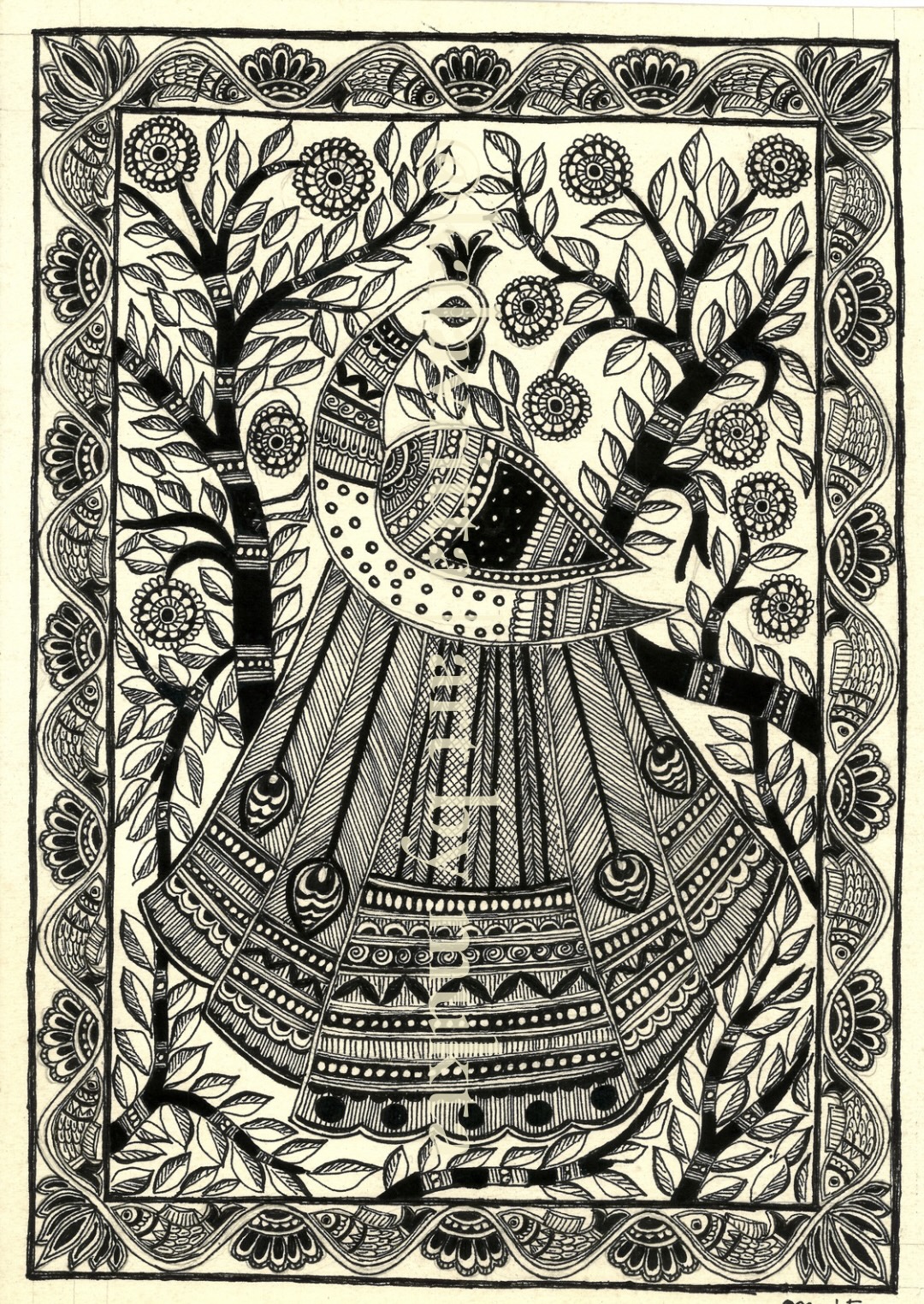
Shikhi, the Crested One | The Peacock
The peacock is a cherished symbol of beauty, grace, enduring love, prosperity and the vibrant rhythm of nature. Created with intricate line work and vivid colours, this painting celebrates the harmony between nature and tradition.

02
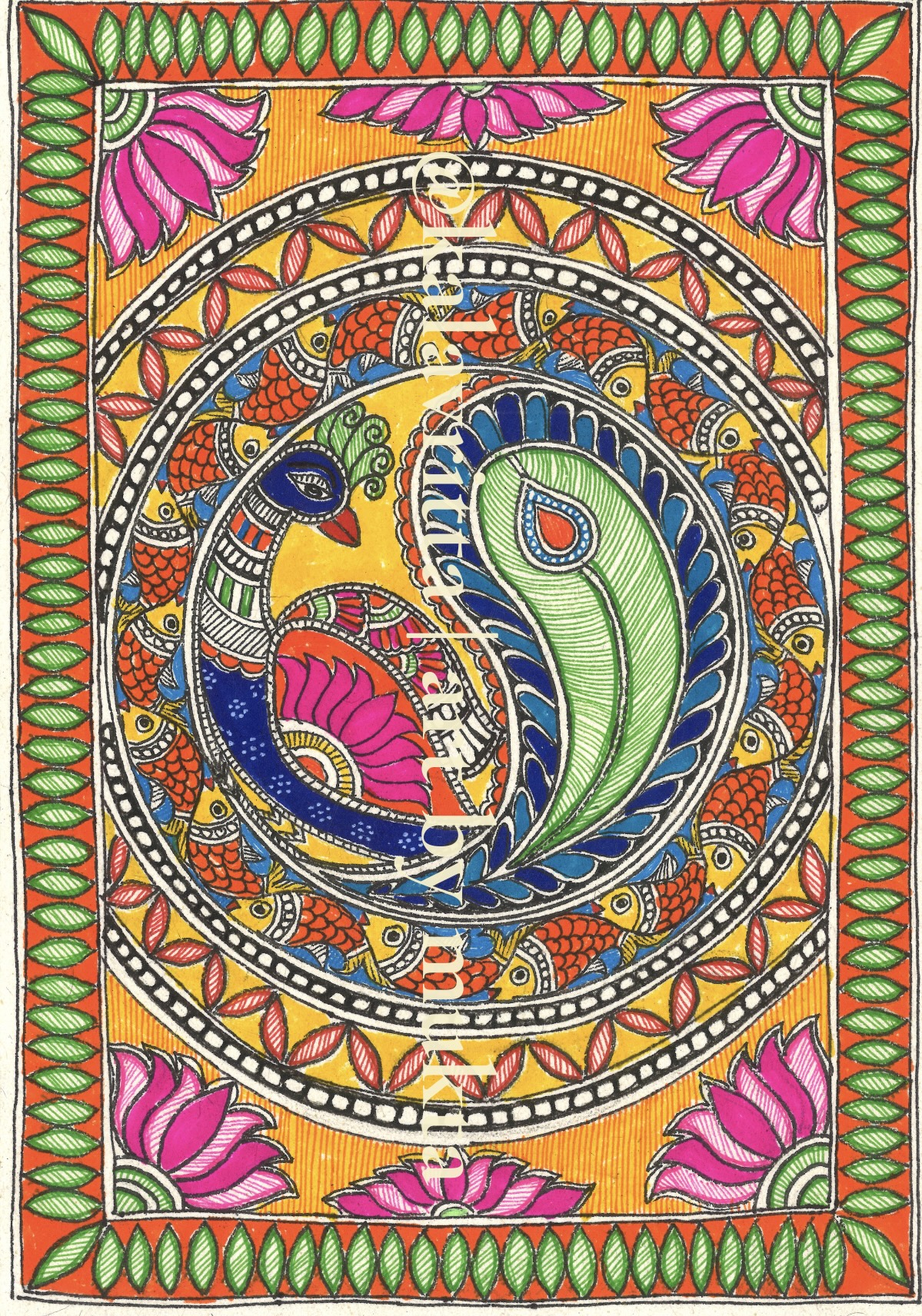
Shikhi, the Crested One | The Peacock
The peacock is a cherished symbol of beauty, grace, enduring love, prosperity and the vibrant rhythm of nature. Created with intricate line work and vivid colours, this painting celebrates the harmony between nature and tradition.

03
Shikhi, the Crested One | The Peacock
The peacock is a cherished symbol of beauty, grace, enduring love, prosperity and the vibrant rhythm of nature. Created with intricate line work and vivid colours, this painting celebrates the harmony between nature and tradition.

04
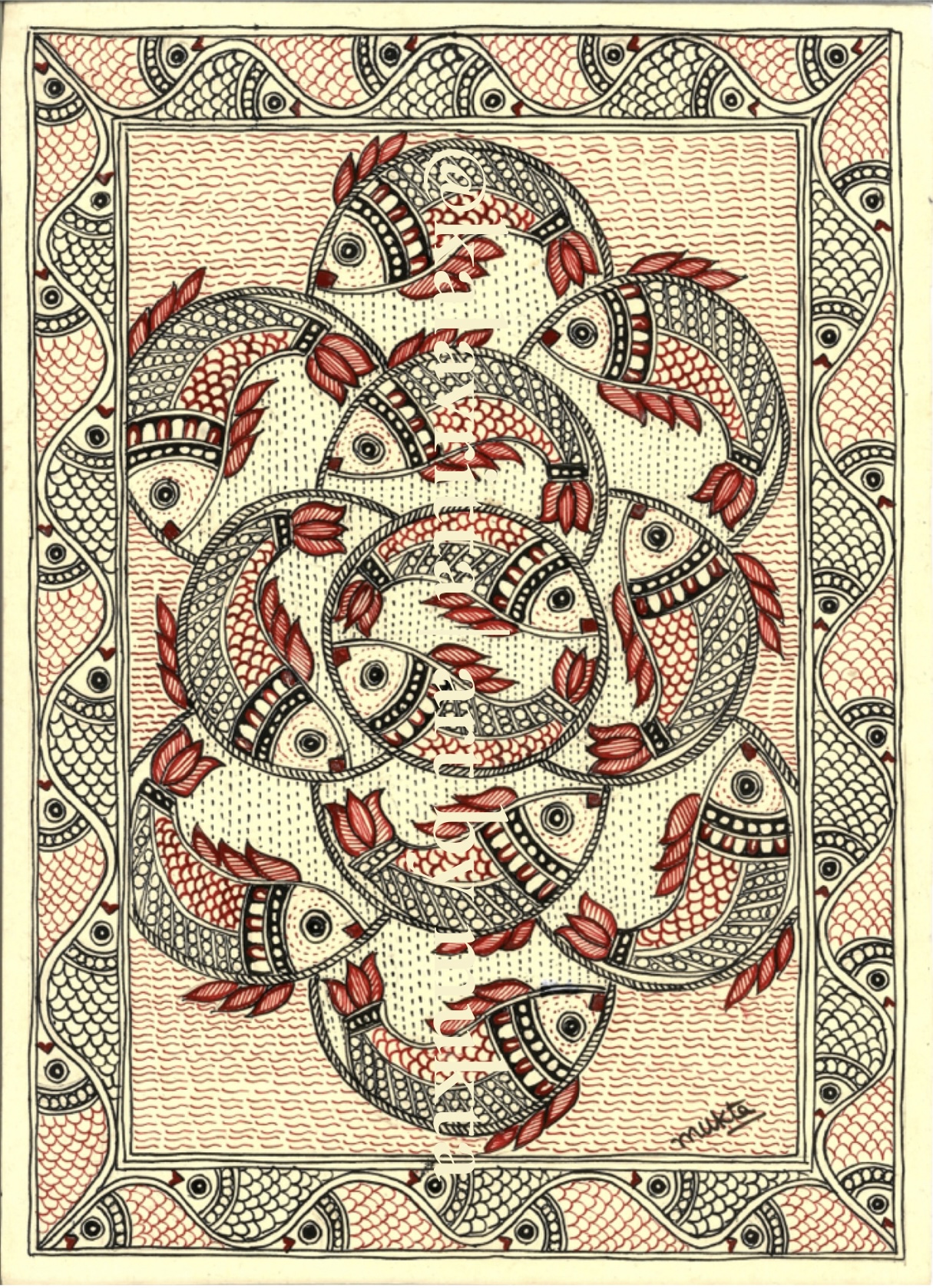
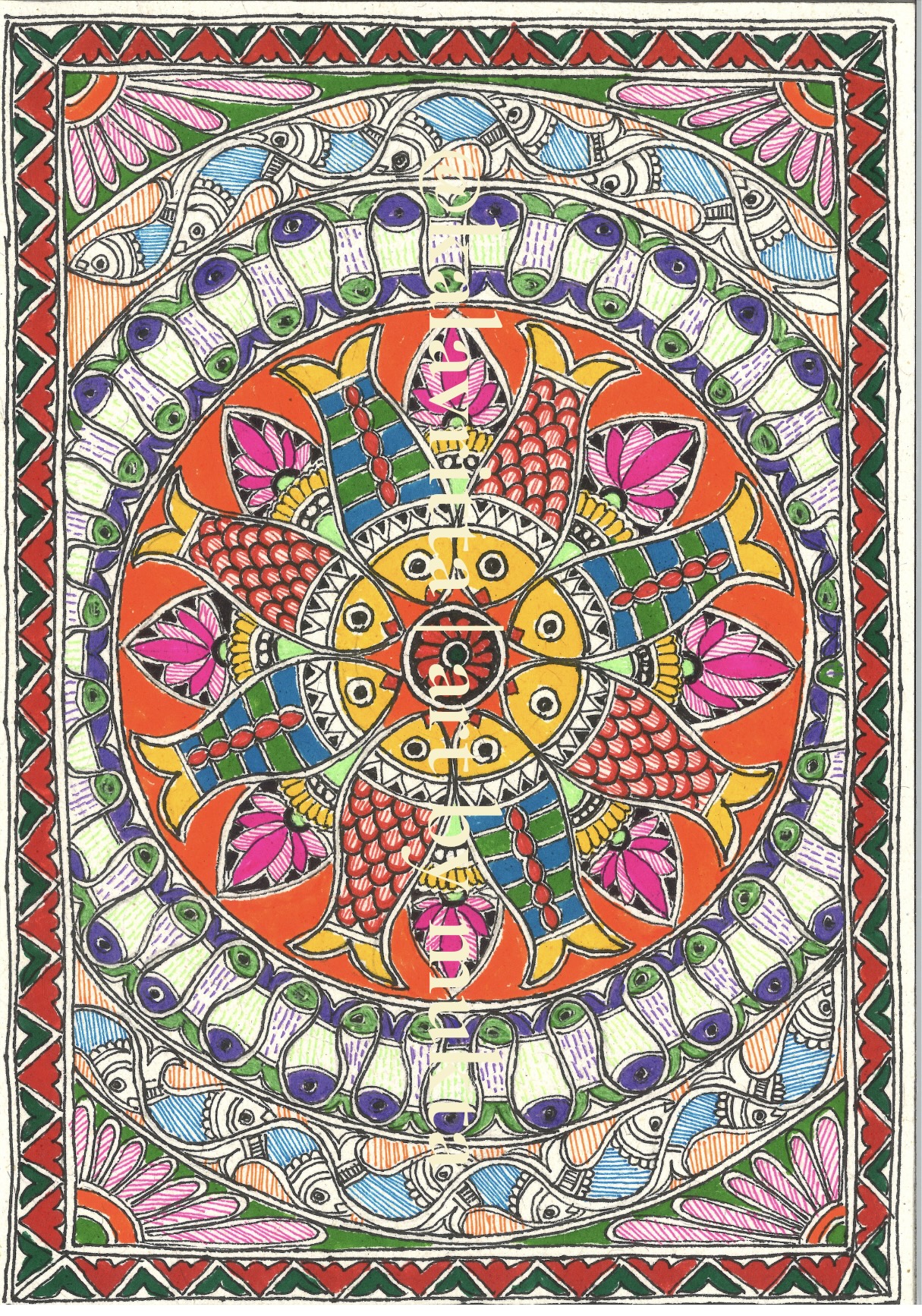
Matsya Raas | Harmony in Motion
In Madhubani art, birds symbolise freedom, harmony
and a deep connection with nature and divinity. Often
depicted in pairs, they represent love, companionship, unity and the continuity of life.
and a deep connection with nature and divinity. Often
depicted in pairs, they represent love, companionship, unity and the continuity of life.

05
Matsya Raas | Harmony in Motion
In Madhubani art, birds symbolise freedom, harmony
and a deep connection with nature and divinity. Often
depicted in pairs, they represent love, companionship, unity and the continuity of life.
and a deep connection with nature and divinity. Often
depicted in pairs, they represent love, companionship, unity and the continuity of life.

06
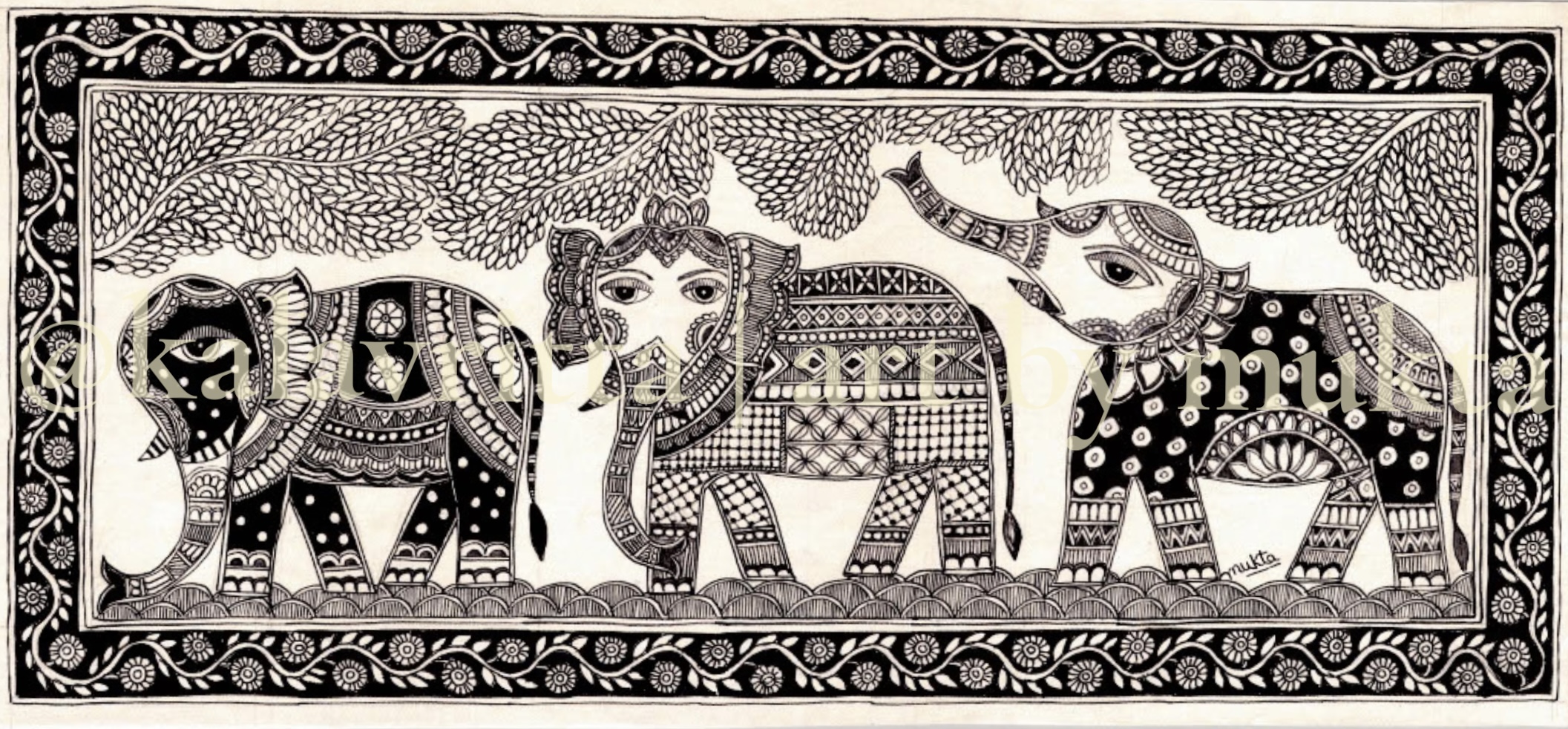
Gaj Vaibhav | The Elephant
In Madhubani art the elephant symbolises strength, wisdom, dignity and good fortune, and is associated
with stability and prosperity. Adorned with intricate patterns and traditional motifs, the elephant in this painting celebrates the grandeur of nature and the
artistic heritage of Mithila.
with stability and prosperity. Adorned with intricate patterns and traditional motifs, the elephant in this painting celebrates the grandeur of nature and the
artistic heritage of Mithila.

07
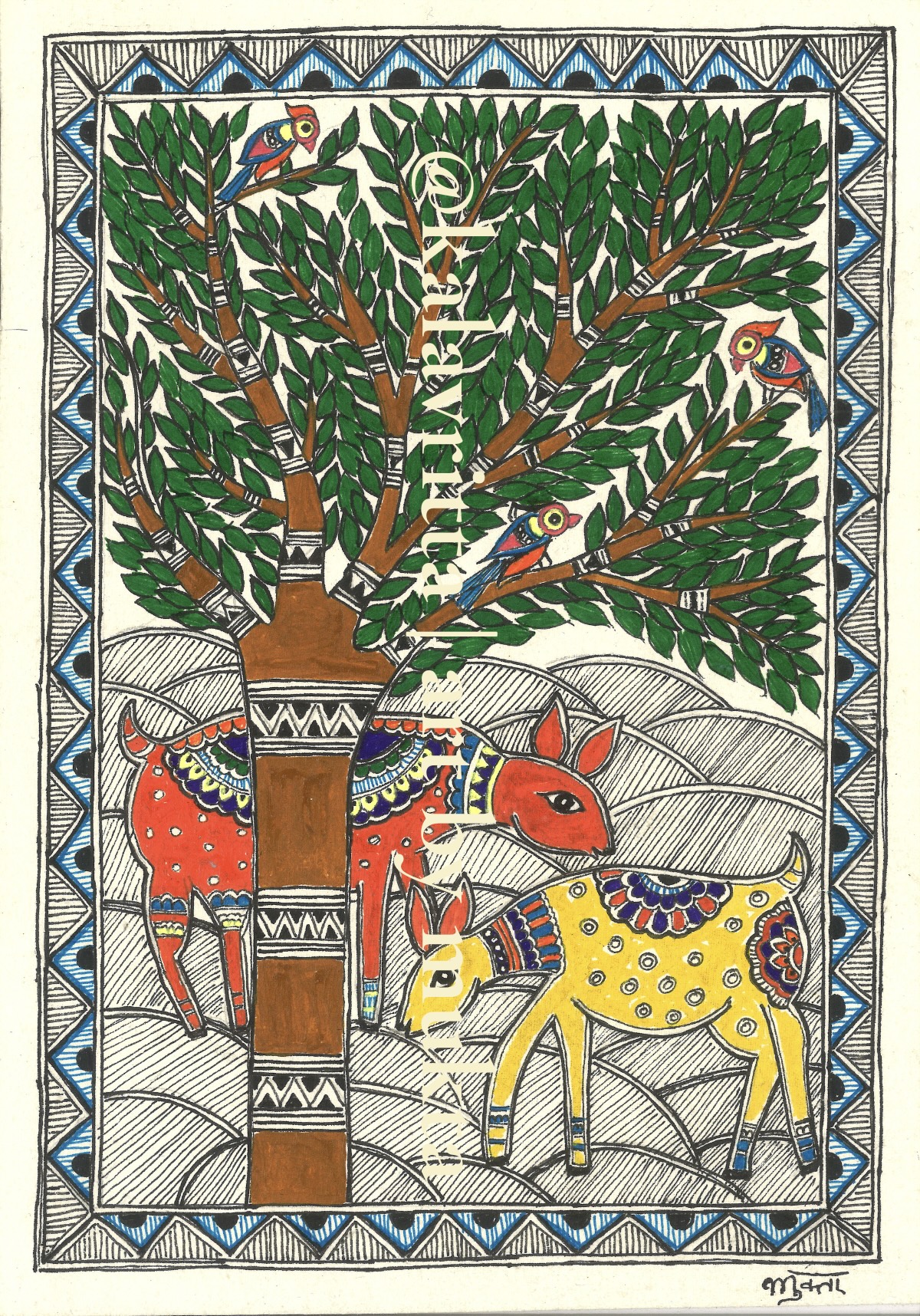
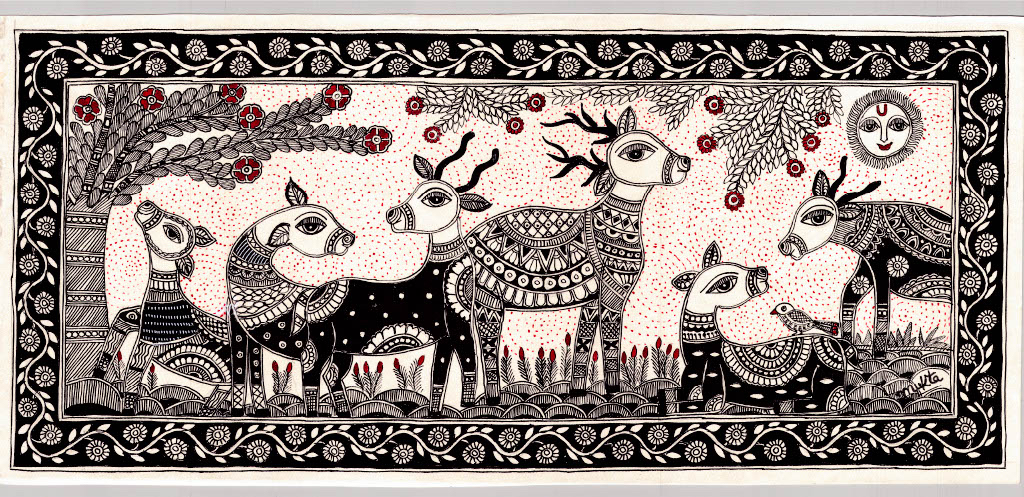
Mrigtrishna | The Deer
The deer is a symbol of grace, sensitivity and harmony with nature. In traditional Madhubani art it represents
peace, innocence and the quiet beauty of nature.
Depicted with intricate patterns and vibrant colours, the deer reflects the artistic richness of Madhubani. In
mythology the deer with Krishna depicts love, while in
the Ramayana it appears as a beautiful illusion.
peace, innocence and the quiet beauty of nature.
Depicted with intricate patterns and vibrant colours, the deer reflects the artistic richness of Madhubani. In
mythology the deer with Krishna depicts love, while in
the Ramayana it appears as a beautiful illusion.

08
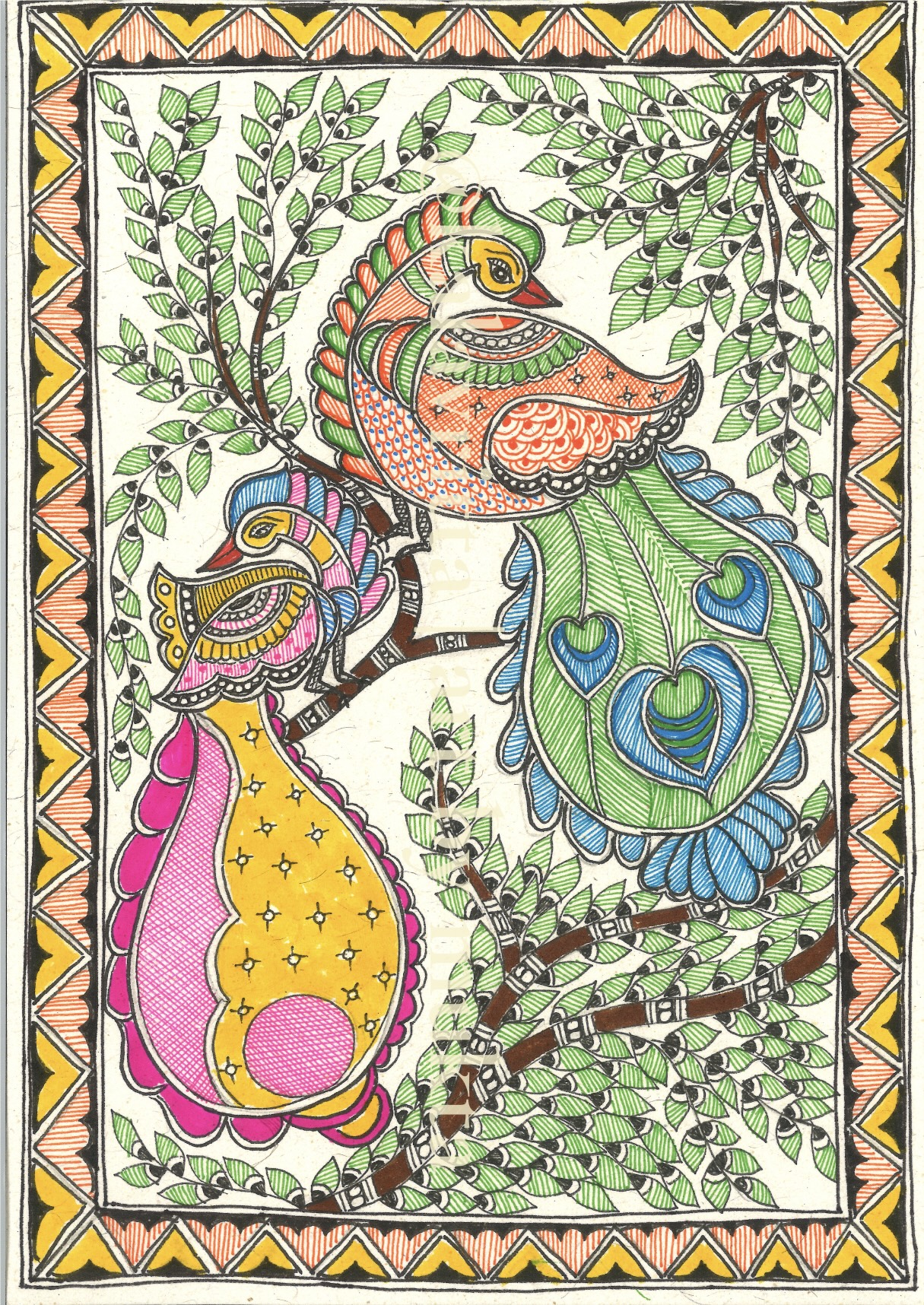
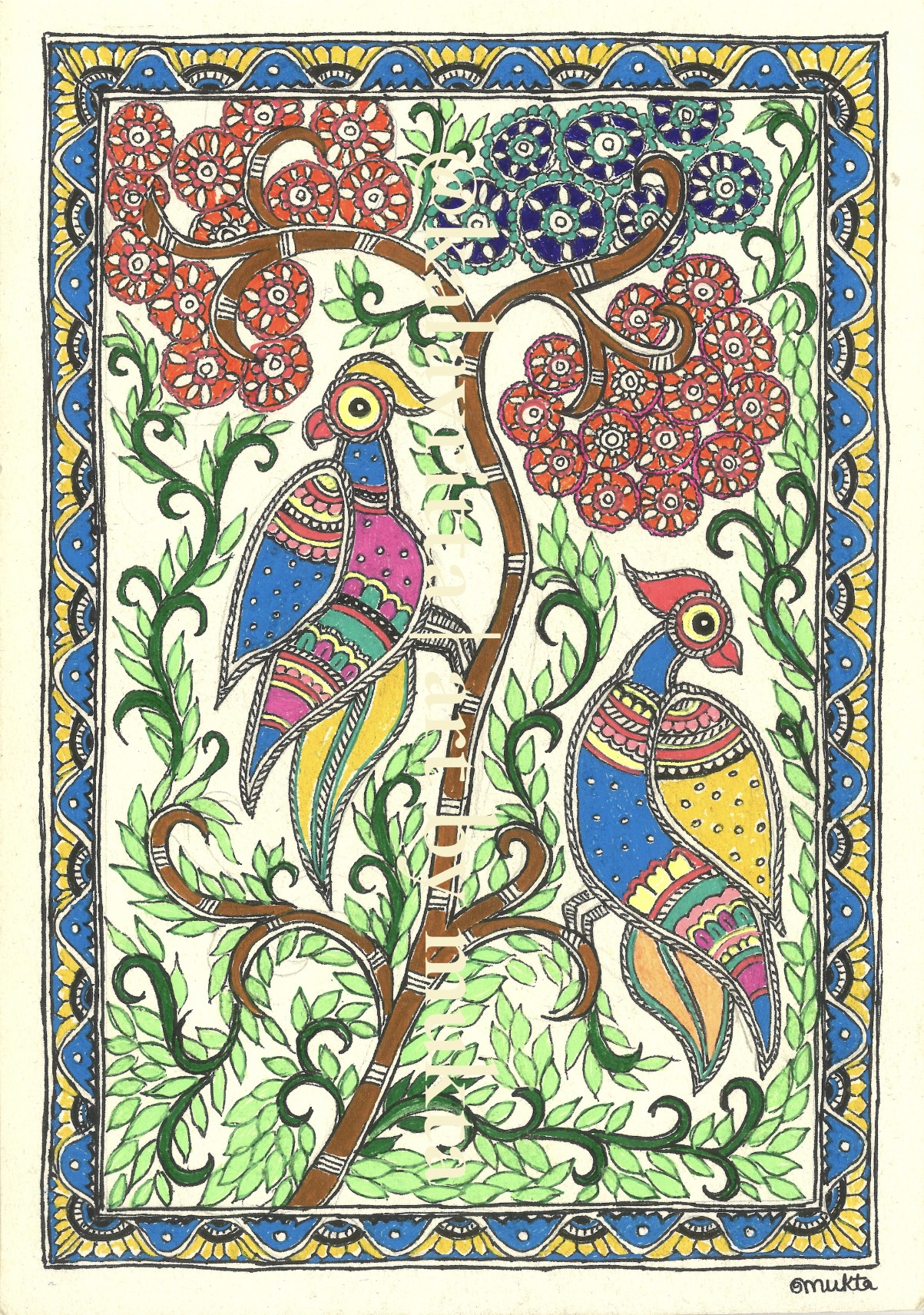
Vriksha Vihang | Garden of Life
In Madhubani art, birds symbolise freedom, harmony
and a deep connection with nature and divinity. Often
depicted in pairs, they represent love, companionship, unity and the continuity of life.
and a deep connection with nature and divinity. Often
depicted in pairs, they represent love, companionship, unity and the continuity of life.

09
Mrigtrishna | The Deer
The deer is a symbol of grace, sensitivity and harmony with nature. In traditional Madhubani art it represents
peace, innocence and the quiet beauty of nature.
Depicted with intricate patterns and vibrant colours, the deer reflects the artistic richness of Madhubani. In
mythology the deer with Krishna depicts love, while in
the Ramayana it appears as a beautiful illusion.
peace, innocence and the quiet beauty of nature.
Depicted with intricate patterns and vibrant colours, the deer reflects the artistic richness of Madhubani. In
mythology the deer with Krishna depicts love, while in
the Ramayana it appears as a beautiful illusion.
bottom of page